

Anytime a test promises to explain something as personal as your sleep, a healthy dose of skepticism is a reasonable place to start. Accuracy is really two separate questions bundled together. First, how reliably does the lab read your DNA. Second, how well does what gets read actually predict your sleep. Those two questions have very different answers, and conflating them is where a lot of confusion about DNA testing comes from.
This article separates the two, so you can walk away with a realistic sense of what a sleep genetics report can and cannot tell you, and how much confidence to place in the result sitting in your dashboard.
Lab Accuracy: How Reliable Is the Genotyping Itself
The technical process of reading your DNA, known as genotyping, is the part of this equation that is genuinely very accurate. Modern genotyping arrays, the kind used by direct-to-consumer testing companies, typically report call accuracy rates above 99 percent for the specific genetic markers, or SNPs, they are designed to read. This is a mature, heavily validated technology, and errors at the level of “did the machine correctly identify which letter is present at this location” are rare.
Where things get more nuanced is in what happens next: which SNPs are chosen for analysis, how the science behind each one is interpreted, and how confidently a report can translate a genetic variant into a statement about your sleep. That interpretive layer is where accuracy becomes less of a yes-or-no question and more of a matter of degree.
Genotyping Versus Whole Genome Sequencing
It is worth knowing that most consumer sleep genetics tests use SNP-based genotyping rather than full genome sequencing. Genotyping checks specific, well-studied positions in your DNA rather than reading every single letter of your genome. This is not a shortcut that sacrifices meaningful accuracy for the purposes of sleep-related reports, since the genes most strongly associated with circadian rhythm, melatonin signaling, and sleep architecture have well-documented SNPs that genotyping captures reliably. Full sequencing offers more raw data overall, but for consumer sleep reports specifically, it rarely changes the practical conclusions.
Predictive Accuracy: How Well Genes Predict Your Actual Sleep
This is where the honest answer gets more complicated, and any report or article that claims otherwise is oversimplifying. Sleep traits, including how long you sleep, how easily you fall asleep, and what time of day you naturally prefer to be awake, are polygenic, meaning they are influenced by many genes acting together, each contributing a small effect, rather than a single gene determining the outcome the way certain rare disease variants do.
A well-studied gene like PER3, tied to circadian period length, might shift someone’s natural sleep timing by a modest amount on average across a population, but it does not determine, on its own, exactly what time an individual person will feel sleepy. Add in dozens of other contributing genes, plus environmental variables like light exposure, work schedule, stress, and caffeine intake, and you get a picture where genetics explains a meaningful slice of the variation in sleep between people, but rarely the whole story.
Why “Associated With” Is the Right Language
This is why credible sleep genetics reports use language like “associated with an increased likelihood” rather than “will cause” or “guarantees.” A variant linked to shorter typical sleep duration in research studies reflects a statistical pattern observed across large groups of people, not a deterministic rule for any one individual. If your report says a certain gene is associated with lighter sleep, the honest interpretation is that people with your variant tend, on average, to report lighter sleep more often than people without it, not that you personally are locked into that pattern regardless of anything else you do.
What Affects the Confidence of a Given Result
Not all findings in sleep genetics carry equal weight, and part of using these reports responsibly is knowing which results rest on a stronger foundation. A few factors matter here.
Sample size of the underlying research matters a great deal. A genetic association discovered in a study of 50,000 people carries more statistical weight than one discovered in a study of 500. Replication matters too. Findings that have been confirmed across multiple independent studies, in different populations, are considerably more trustworthy than a single study that has not yet been reproduced. Reputable platforms typically indicate, at least implicitly through the depth and sourcing of their reports, how well-established a given association is, and it is worth reading the supporting explanation in a report rather than skipping straight to the result label.
Population Ancestry and Study Diversity
Another accuracy consideration that does not get discussed often enough is that much of the foundational genetic research on sleep, like a lot of genomic research broadly, has historically been conducted on populations of predominantly European ancestry. This means associations may be somewhat less precisely calibrated for people from other ancestral backgrounds, since allele frequencies and gene-environment interactions can differ across populations. This is an active area of improvement in the field, and it is a reasonable thing to keep in mind rather than a reason to dismiss the value of testing altogether.
Using Results With the Right Level of Confidence
None of this means DNA testing for sleep is unreliable or not worth doing. It means the honest use case is different from what marketing sometimes implies. A sleep genetics report is best treated as a set of informed hypotheses about your biology, backed by real research, rather than a diagnostic verdict. Used that way, it becomes a genuinely useful tool. If your report on the Serotonin and Melatonin Pathway suggests a genetic tendency toward slower melatonin production, that is valuable context for why evening supplementation strategies might make more sense for you than for someone without that variant, even though it is not a certainty.
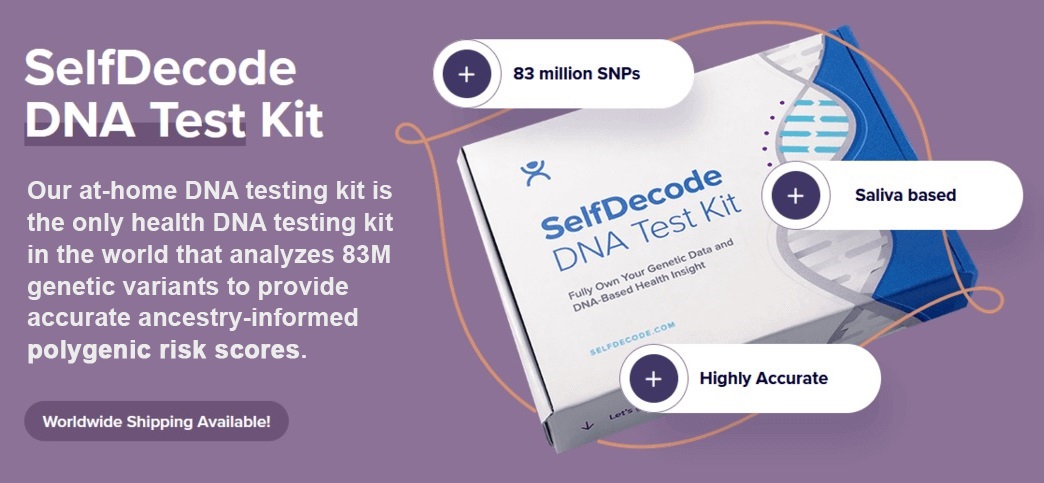
Platforms like SelfDecode try to address the interpretive gap by pairing each genetic result with the actual research behind it and reasonable next steps, rather than leaving you with a bare label and no context. That combination of transparency about confidence level and practical guidance is what separates a responsibly built report from an overhyped one. And on the practical side, if your results point toward genetic factors that make natural melatonin regulation or relaxation harder to come by, a nutrient-based option like Performance Lab Sleep, built around magnesium, tart cherry, L-tryptophan, and lemon balm, is a reasonable low-risk way to address the mechanisms your genetics are hinting at, alongside anything else your healthcare provider recommends.
Frequently Asked Questions
Can two different DNA testing companies give me different results for the same gene?
It is possible, usually not because the raw genotyping is wrong, but because companies sometimes interpret the same variant using different research studies or scoring thresholds, which can lead to slightly different phrasing or risk categories.
Is a DNA test more accurate than keeping a sleep journal?
They measure different things, so it is not really an either-or comparison. A sleep journal captures your actual lived experience, while a DNA test reveals underlying biological tendencies, and the two work best when used together rather than as competing methods.
Does having a “typical” result mean my genes have no influence on my sleep?
No, a typical result simply means your variant at that particular location matches the more common version found in the general population, not that genetics play no role in your sleep patterns overall.
How often is sleep genetics research updated, and does that change my results?
Research in this field continues to expand, and reputable platforms periodically update their interpretations as new studies are published, so a report you view today may reflect more refined science than it did a year or two earlier.