

Once you have decided that DNA testing for sleep is something you want to try, a second decision shows up almost immediately: do you buy a single report focused on one specific question, or a bundle that covers several sleep-related traits at once. Neither option is universally correct, and the right choice tends to come down to how specific your curiosity is and how much you already suspect about your own sleep patterns.
This guide walks through how individual reports and bundles differ in practice, and offers a few scenarios to help you figure out which approach fits your situation best.
What an Individual Report Gives You
An individual report is exactly what it sounds like, a focused look at one specific trait, such as Chronotype, Sleep Latency, or the BHLHE41 gene, without the broader context of other related reports. This option makes the most sense when you have a specific, well-defined question you are trying to answer. If you have always suspected you are a night owl fighting against a morning-oriented schedule, a standalone Chronotype report answers that particular question directly, without requiring you to pay for reports on traits you are less curious about.
Individual reports are also a sensible entry point if you are new to DNA testing generally and want to get a feel for the format, the depth of explanation, and how the results are presented before committing to a larger purchase.
What a Bundle Adds
A bundle groups multiple related reports together, typically at a lower combined price than purchasing each one separately, and its real value goes beyond the discount. Sleep traits, as covered elsewhere on this site, tend to involve multiple interacting genes and pathways rather than a single isolated variant, so a bundle that includes, say, Chronotype, Sleep Latency, and the Serotonin and Melatonin Pathway report gives you the ability to see how these different threads connect rather than reading each one as a standalone fact.
For someone who has struggled with sleep across multiple dimensions, difficulty falling asleep, poor sleep quality, and daytime fatigue, for example, a bundle is usually the more efficient and more illuminating choice, since it lets you compare results across reports and notice patterns a single report could never reveal on its own.
The Cost-Per-Report Math
It is worth doing a bit of simple arithmetic before deciding. Bundles are generally priced so that the effective cost per individual report drops as you add more reports to the package, which means that if you are even moderately interested in three or more sleep-related reports, a bundle is very likely to work out cheaper than buying each report separately, in addition to giving you the cross-referencing benefit.
Scenarios to Help You Decide
A few common situations tend to point clearly toward one option or the other. If you have one specific, nagging question, such as why you always seem to feel groggy in the afternoon regardless of how much you slept, a single Daytime Sleepiness report is a reasonable and inexpensive way to get a direct answer. If your sleep struggles feel more diffuse and hard to pin to one cause, a bundle that spans several related traits is more likely to surface the actual underlying pattern.
If you are testing the waters and unsure whether genetic insight will resonate with you at all, starting small with an individual report keeps your initial investment low while still giving you a genuine sense of the experience. If you are already fairly confident that you want a comprehensive picture, perhaps because you have tried numerous sleep interventions without success and are looking for a more foundational explanation, jumping straight to a bundle saves you from paying for several individual reports one at a time later.
When a Full Bundle Might Be More Than You Need
It is also fair to acknowledge that a full bundle is not automatically the best choice for everyone. If your interest in sleep genetics is casual curiosity rather than an active effort to solve a specific problem, a smaller selection of one or two reports may deliver plenty of satisfaction without the larger expense. There is no requirement to buy the most comprehensive option available just because it exists.
Buying for Someone Else
DNA sleep testing has also become a fairly popular gift, particularly for people who already show a genuine interest in health optimization or who have complained often enough about their sleep that a more targeted answer feels like a thoughtful gesture. In gifting scenarios, an individual report or a modest bundle is usually the safer choice over a large, comprehensive package, since you are making an assumption about how deep the recipient’s curiosity will actually run. A smaller, well-chosen report, such as Chronotype for someone who constantly complains about early mornings, tends to land better than an enormous bundle that might feel overwhelming to someone just getting introduced to the idea.
If the gift goes over well and sparks genuine curiosity, expanding into a fuller bundle later is always an option, and doing so does not require starting the testing process over from scratch.
Making a Confident Choice
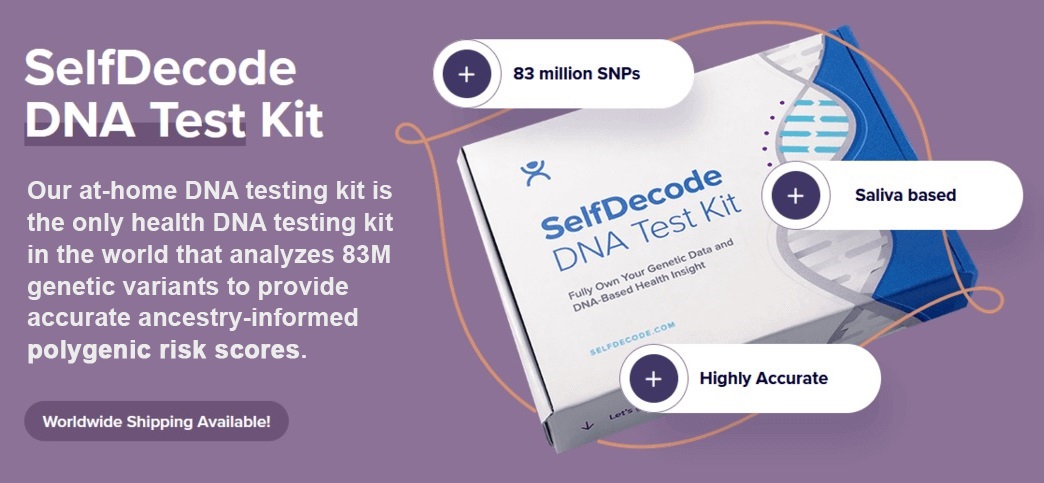
Whichever direction you lean, it helps to start by naming, even just to yourself, what you actually want to learn. That single step tends to clarify the individual-versus-bundle decision more than any pricing comparison alone. Platforms like SelfDecode are generally structured to let you start small and expand later, so an initial choice does not have to be a permanent one, you can always add related reports down the line as new questions come up.
Regardless of which purchasing path you choose, remember that the reports themselves are only the starting point. If your results, whether from a single report or a full bundle, point toward genetic tendencies around relaxation or melatonin regulation, that is useful context for considering a nutrient-based option like Performance Lab Sleep, built around magnesium, tart cherry, L-tryptophan, and lemon balm extract, as a practical next step alongside anything your healthcare provider recommends.
Frequently Asked Questions
Can I upgrade from an individual report to a full bundle later without retesting?
In most cases yes, since your original sample and raw genetic data typically remain on file, allowing additional reports to be generated from the same data without requiring a brand-new sample.
Are bundle reports updated as frequently as individual reports?
Generally yes, reports within a bundle are usually maintained on the same update schedule as their standalone counterparts, so you should not expect bundled reports to lag behind in accuracy or currency.
Is there a risk of information overload if I buy a large bundle all at once?
It can feel like a lot at first, and a reasonable approach is to read through one or two reports at a time rather than trying to absorb an entire bundle in a single sitting.
Do bundles ever include reports outside of sleep that could still be relevant?
Some broader bundles combine sleep-related reports with adjacent categories, such as stress response or nutrient metabolism, since these areas can interact with sleep biology in ways that add useful context.