


















Your Sleep Is Not Generic. Why Should the Advice Be?
You have probably heard it all before. Cut the caffeine after noon. Keep your room cool and dark. Put the phone down an hour before bed. It is solid advice, and it still leaves an obvious question unanswered: if the fixes are so well known, why do so many people follow them faithfully and still lie awake at 2 a.m. wondering what they are doing wrong?
The honest answer is that sleep problems rarely have one root cause, and the cause that matters most is often the one nobody mentions: your own biology. Two people can share a bedroom, a bedtime, and a nightstand full of the same wellness gadgets, and still sleep completely differently, because their circadian rhythms, their neurochemistry, and their genetics are not the same. Decoded Sleep exists to put that missing piece back into the conversation.
Understand Your Genetics. Sleep Better.
That is our tagline, and it is also our entire approach in one sentence. Instead of treating sleep as a single universal problem with a single universal fix, we dig into the biology that makes your sleep yours: the genes that set your natural chronotype, the pathways that govern melatonin and serotonin production, the inherited tendencies that make certain nutrients or routines work better for you than for the next person. Once you understand what is actually happening under the hood, generic advice starts to make a lot more sense, or in some cases, starts to make a lot less sense, which is just as useful to know.
We cover this ground from a few different directions. Some articles dig into the foundational science of circadian rhythm and clock genes, the kind of biology that explains why some people are wired to be up at dawn while others do their best thinking at midnight. Others explore the neurochemistry of sleep, including the serotonin, melatonin, and GABA pathways that determine how easily you drift off and stay asleep. We look at genetic tendencies linked to sleep disorders, the research behind nutrients and supplements commonly used for sleep support, and practical strategies for building a routine that actually fits your chronotype rather than fighting it.
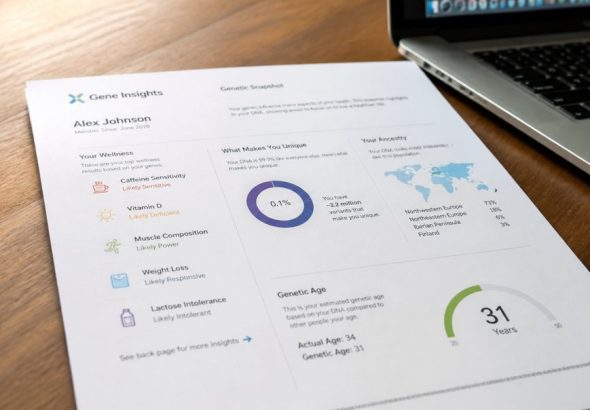
We also spend real time on DNA testing itself, walking through what an at-home sleep genetics test actually involves, how accurate the science really is, and how to make sense of a report once it lands in your inbox. And because sleep does not stay the same across your life, we cover how it shifts through adolescence, pregnancy, menopause, aging, shift work, and beyond, since the biology behind your sleep at seventeen is not the biology behind your sleep at seventy.
Two Tools, One Goal
Along the way, you will see us reference two specific products that align closely with what we write about. SelfDecode offers at-home DNA testing and individual genetic reports covering sleep, chronotype, and related traits, for readers who want to see their own biology laid out in detail. Performance Lab Sleep is a nighttime supplement built around magnesium, tart cherry, L-tryptophan, and lemon balm, for readers whose research points toward a more nutrient-focused approach. Neither one is a magic fix, and we try to be upfront about that. They are tools, and like any tool, they work best when you understand why you are reaching for them in the first place.
Whether you found your way here because you are chasing down a specific symptom, comparing DNA testing services, or just curious why your partner falls asleep the instant their head hits the pillow while you are still staring at the ceiling forty minutes later, there is likely an article here that speaks directly to your situation. Take a look through our featured and recent articles, and start wherever your own curiosity leads.