
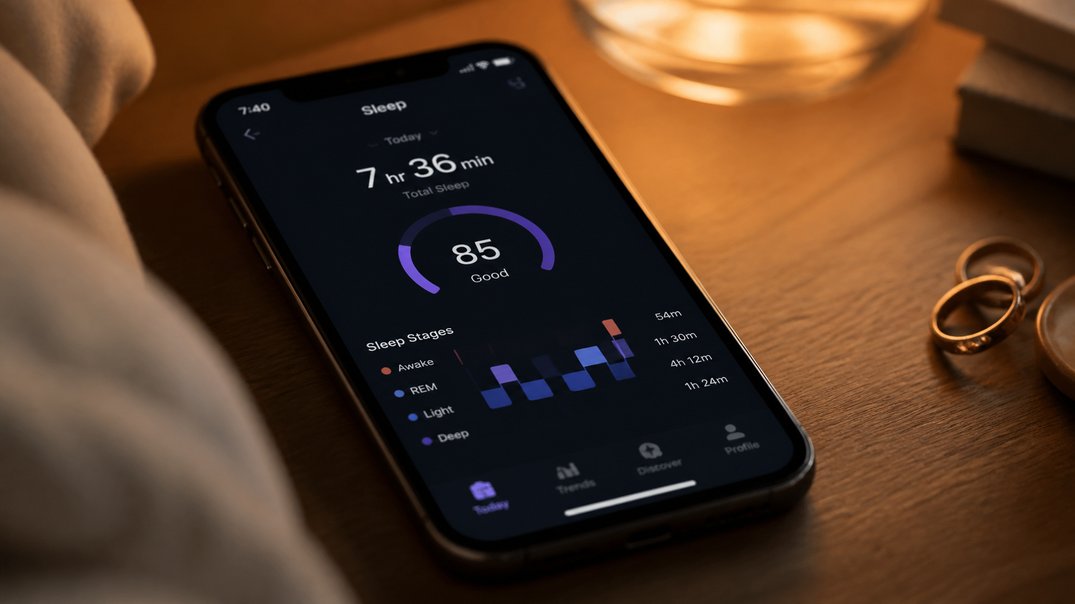
Between a smartwatch buzzing you awake with a sleep score every morning and a DNA report explaining why your circadian genes lean late, it is easy to wonder which one is actually worth paying attention to. The honest answer is that they are not really competing for the same job. One measures what is happening. The other explains why it might be happening that way in the first place.
Understanding the difference matters because a lot of people invest in one and assume it covers what the other does. It usually does not, and knowing where each tool’s strengths and blind spots sit will help you get more out of both.
What Sleep Tracking Apps Actually Measure
Sleep tracking apps and wearables, whether a dedicated ring, a wristband, or a phone sitting on your nightstand, rely on a combination of movement sensors, heart rate monitoring, and sometimes blood oxygen or skin temperature data to estimate what stage of sleep you are likely in at any given moment. From this, they generate estimates of total sleep time, time spent in light, deep, and REM stages, and how many times you woke or stirred during the night.
The key word here is estimates. Consumer sleep trackers are not medical-grade polysomnography, the gold-standard lab test that directly measures brain waves, and independent validation studies have generally found that wearables are reasonably good at distinguishing sleep from wake but noticeably less precise when it comes to identifying specific sleep stages. Even with those caveats, night-to-night trends captured by a tracker are genuinely useful, since they reflect your actual, real-world sleep behavior rather than a theoretical tendency.
The Strength of Trackers: Real Behavior, Real Time
What a tracker captures that a DNA test never can is what actually happened last night, in your actual environment, under your actual stress levels, after your actual choices about caffeine, alcohol, or screen time. If you want to know whether a new evening routine is working, a tracker gives you a before-and-after comparison grounded in your real data, not a genetic prediction of what should happen in theory.
What a DNA Test Measures Instead
A DNA sleep test works in the opposite direction. Rather than observing what happened, it looks at inherited variants in genes tied to circadian rhythm, melatonin and serotonin regulation, and sleep architecture, and reports on tendencies associated with those variants. It cannot tell you how you slept last Tuesday. It can tell you whether your biology leans toward a later natural chronotype, whether you carry variants associated with lighter or more fragmented sleep, or whether your melatonin pathway tends to run on the slower side.
This is a fundamentally different kind of information: stable, background biology rather than a nightly snapshot. It does not change from week to week, and it is not affected by whether you had a stressful day or a glass of wine with dinner.
Why Genetics Explains the “Why” Behind Tracker Data
This is actually where the two tools complement each other most directly. Say your tracker consistently shows that you take 40 minutes to fall asleep most nights, well above average. A tracker alone cannot tell you whether that is a temporary stress-related pattern or a longer-standing tendency rooted in your biology. A Sleep Latency report, on the other hand, might reveal that you carry variants associated with a naturally longer sleep onset time, which reframes that tracker data from “something is wrong” to “this is closer to your baseline, and here is what might help.”
Where Each Tool Falls Short on Its Own
Trackers, for all their real-time usefulness, cannot explain root causes. A string of poor sleep scores tells you that something is off, but not why, and it is easy to fall into a loop of trying random fixes without understanding the underlying mechanism. DNA tests have the opposite limitation: they explain tendencies but say nothing about your actual, current sleep, and they cannot account for the countless daily variables, from jet lag to a new puppy, that genetics has no way of predicting.
Relying only on a tracker can lead to treating symptoms without addressing causes. Relying only on genetics can lead to a static, theoretical understanding of your sleep that never gets checked against reality. Used together, each one covers the other’s blind spot.
Cost and Commitment: A Practical Difference
There is also a practical difference in how these two tools ask for your time and money. A sleep tracker is typically an ongoing commitment, whether that means a subscription fee, nightly charging, or simply remembering to wear the device consistently enough for its trends to mean anything. Miss enough nights and the data gets patchy, which can make it harder to trust the pattern you think you are seeing.
A DNA test, by contrast, is a one-time investment. You collect your sample once, and the resulting reports on chronotype, sleep latency, or melatonin pathway genetics remain relevant indefinitely, since the underlying variants do not change. This does not make one option inherently better than the other, but it is worth factoring into your decision if you are trying to figure out where to start, especially if ongoing tracking is not something you are confident you will stick with long term.
How to Use Both Together
A practical approach is to treat your DNA report as the explanatory layer and your tracker as the feedback loop. If a Chronotype report suggests you lean toward a later natural rhythm, you can use tracker data to confirm whether your actual bedtime and wake patterns match that tendency, or whether an early alarm has been fighting your biology for years without you realizing it. If a Serotonin and Melatonin Pathway report points to slower melatonin conversion, tracker data on how long it takes you to fall asleep can help you see whether an evening adjustment, like earlier dim lighting or a nutritional change, is actually moving the needle.
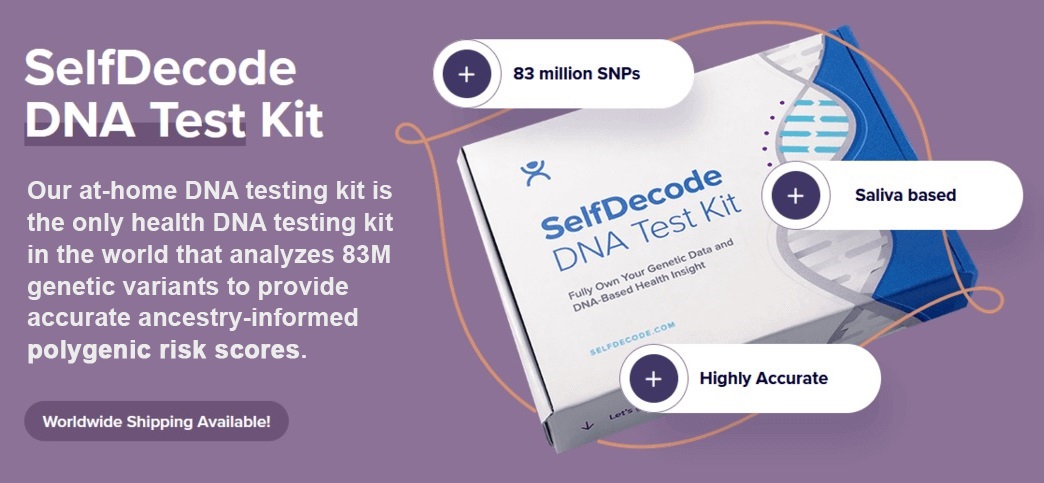
This is also where a platform like SelfDecode is designed to be useful beyond the report itself, since it frames each genetic tendency alongside practical context, giving you a starting hypothesis to test against your own tracked data rather than a disconnected fact. And if your combined picture, genetic tendency plus tracked reality, points toward difficulty with relaxation or melatonin production specifically, a supplement like Performance Lab Sleep, built around magnesium, tart cherry, L-tryptophan, and lemon balm extract, is a reasonable next step to test and then measure against your tracker data going forward.
Frequently Asked Questions
If my tracker says I sleep well, is there any reason to still get a DNA test?
Yes, a DNA test can reveal underlying tendencies, such as a genetic predisposition toward fragmented sleep, that may not show up clearly in tracker data yet but could become relevant as circumstances change, like aging, travel, or shift work.
Can a sleep tracker detect genetic sleep disorders?
No, trackers can flag patterns worth discussing with a doctor, such as unusually frequent waking or low blood oxygen readings, but they cannot identify genetic causes and are not a substitute for clinical diagnosis.
Which is more useful for someone just starting to improve their sleep, a tracker or a DNA test?
Both offer value from different angles, and there is no strict requirement to choose one first, though many people find it helpful to start with a tracker to establish a baseline before layering in genetic context.
Do sleep trackers and DNA tests ever directly integrate with each other?
Some platforms allow you to import tracker data alongside your genetic reports for side-by-side comparison, though the level of integration varies depending on which specific tracker and testing service you use.