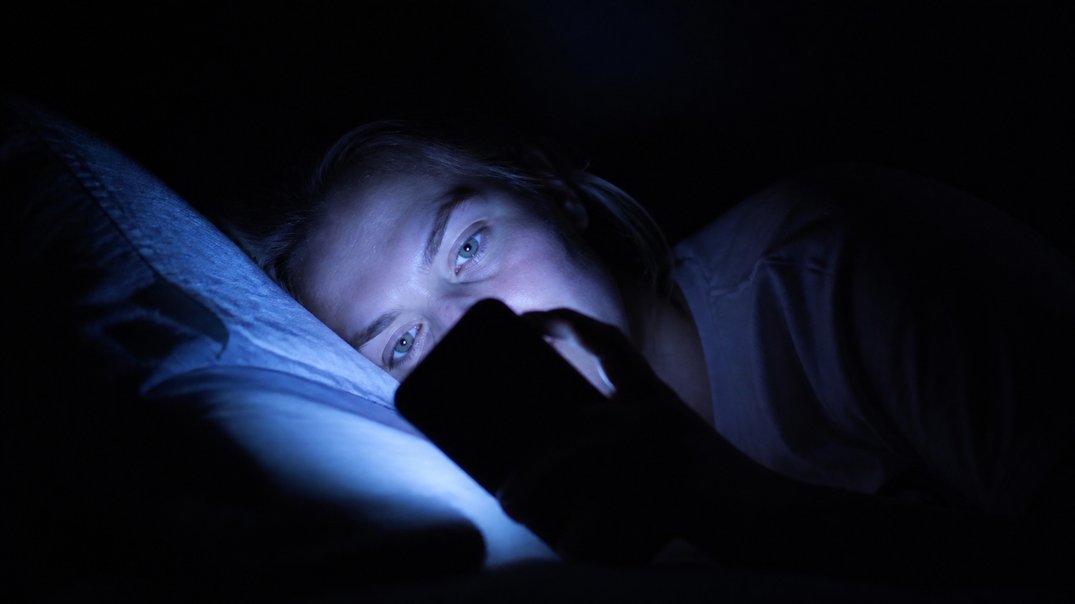
“Put your phone away before bed” has become one of the most repeated pieces of sleep advice, usually justified with a quick mention of blue light and melatonin suppression. But screen time’s actual relationship with sleep is considerably more complicated than the blue light explanation alone suggests, and reducing the entire issue to wavelength science misses some of the more significant ways screens actually interfere with sleep in daily life.
Here we move past the blue light mechanism specifically to look at the bigger picture: a psychological pattern called revenge bedtime procrastination, why content matters more than the screen itself, and what the current research actually supports once you separate genuine findings from oversimplified popular narratives.
The Blue Light Myth vs. The Bigger Picture
Blue light’s effect on melatonin suppression is real but likely a smaller and more modest contributor to screen-related sleep problems than popular wellness content typically implies, particularly once brightness and viewing distance are accounted for separately. Treating blue light wavelength as the single explanation for why screens interfere with sleep overlooks several other mechanisms that may matter just as much or more, mechanisms that have less to do with the light itself and more to do with how and why people actually use their devices in bed each night.
Revenge Bedtime Procrastination: When Screens Displace Sleep Entirely
One of the more significant, and more recently named, patterns connecting screens to poor sleep has little to do with light exposure at all. Revenge bedtime procrastination describes the pattern of deliberately delaying sleep to reclaim a sense of personal time and control after a day that felt overly demanding or lacking in autonomy, often filled with scrolling, watching shows, or browsing rather than any specific screen-related biological mechanism. This pattern is fundamentally about time displacement rather than light exposure, since someone engaging in this pattern isn’t struggling to fall asleep because of blue light, but rather actively choosing to stay awake and delay sleep entirely because the screen time itself feels like the only available personal time in an otherwise overscheduled day.
This distinction matters considerably for how you address the problem. Someone dealing with revenge bedtime procrastination won’t find much benefit from blue light blocking glasses or dimmer screens, since the actual issue is a psychological and lifestyle pattern rather than a biological light-exposure problem. Addressing this pattern usually requires examining daytime demands, finding genuine personal time earlier in the day, or reconsidering evening obligations, rather than any technical adjustment to screen settings.
Content Matters More Than the Screen Itself
Beyond the psychological displacement pattern, the specific content consumed on a screen plays a significant role independent of the screen or its light emission. Engaging, emotionally activating content, whether a tense show, an argument on social media, or doom-scrolling through distressing news, can activate stress-response and dopamine systems in ways that delay sleep onset regardless of screen brightness or blue light content specifically. A calm, low-stimulation activity on a screen, like listening to a familiar podcast at low volume with the screen off, produces a meaningfully different experience than actively scrolling through a fast-moving, algorithmically engineered social media feed, even though both technically involve screen time in the broadest sense.
This is part of why generic advice to simply “avoid screens” sometimes produces underwhelming results. If someone swaps scrolling social media for reading an engaging thriller on a tablet, they may have technically followed the letter of common advice while still consuming stimulating content that works against sleep onset through a mechanism that has little to do with the screen delivering it.
What the Research Actually Supports
Research on screen time and sleep, when it separates blue light, brightness, content, and psychological displacement as distinct variables, generally supports a more nuanced picture than the blanket “screens are bad for sleep” narrative suggests. Some studies have found modest associations between overall screen time and poorer sleep outcomes, but the size of these associations varies considerably, and studies that account for content type and viewing context tend to find that engaging, stimulating content and delayed bedtimes explain more of the variance than blue light exposure alone.
This doesn’t mean screen time is irrelevant to sleep, but it does mean the popular framing often oversimplifies a genuinely multi-factor issue into a single, tidy explanation that’s easier to repeat than to accurately convey. A more accurate summary would acknowledge that screens can interfere with sleep through several distinct pathways, light exposure, content stimulation, and psychological displacement among them, each of which may matter more or less depending on the specific person and specific evening.

Putting This Knowledge to Work
Rather than focusing exclusively on blue light, it makes more sense to honestly assess which of these mechanisms is most relevant to your own screen habits. If you notice yourself deliberately staying up late specifically to reclaim personal time, the underlying issue is likely about daytime demands and autonomy rather than screen light itself. If you notice specific types of content, like doom-scrolling or intense shows, seem to affect your sleep more than others, content choice matters more than screen use in general for you specifically.
Understanding your own genetic tendencies toward stress reactivity and nervous system sensitivity, through a report like SelfDecode’s Sleep analysis, can help clarify why certain evening content or habits affect your own sleep more noticeably than they might for someone else, adding useful context beyond generic screen time advice. Supporting the nervous system nutritionally can also help address whatever residual stimulation lingers after an engaging evening, regardless of its source. A formula like Performance Lab Sleep, combining magnesium, L-Tryptophan, tart cherry, and lemon balm extract, supports the biological pathways involved in winding down, working as a complement to more mindful screen habits rather than a replacement for them.
Frequently Asked Questions
Is it realistic to expect people to completely stop using screens before bed?
For most people, complete avoidance isn’t a particularly realistic or necessary goal. Being thoughtful about content choice, brightness, and overall time spent, along with recognizing patterns like revenge bedtime procrastination, tends to be a more sustainable and effective approach than an all-or-nothing screen ban.
Does audio content, like podcasts or audiobooks, avoid the screen-related sleep issues discussed in this article?
Audio content with the screen off or dimmed avoids both the light exposure and, depending on content, some of the stimulation concerns, making it a reasonable alternative for people who want some form of evening engagement without the full range of screen-related sleep concerns.
Can working on a screen right before bed, like checking email, be worse than entertainment screen use?
Often yes, since work-related content can introduce stress and mental activation beyond simple light exposure or passive entertainment, potentially engaging stress-response systems in ways that entertainment content, particularly calmer content, typically doesn’t to the same degree.
Is revenge bedtime procrastination a sign of an underlying sleep disorder?
Not necessarily. It’s generally considered a behavioral and lifestyle pattern rather than a diagnosed sleep disorder, though persistent, significant sleep restriction from this pattern can produce real consequences worth addressing, and a healthcare provider can help if it’s contributing to chronic sleep deprivation.