
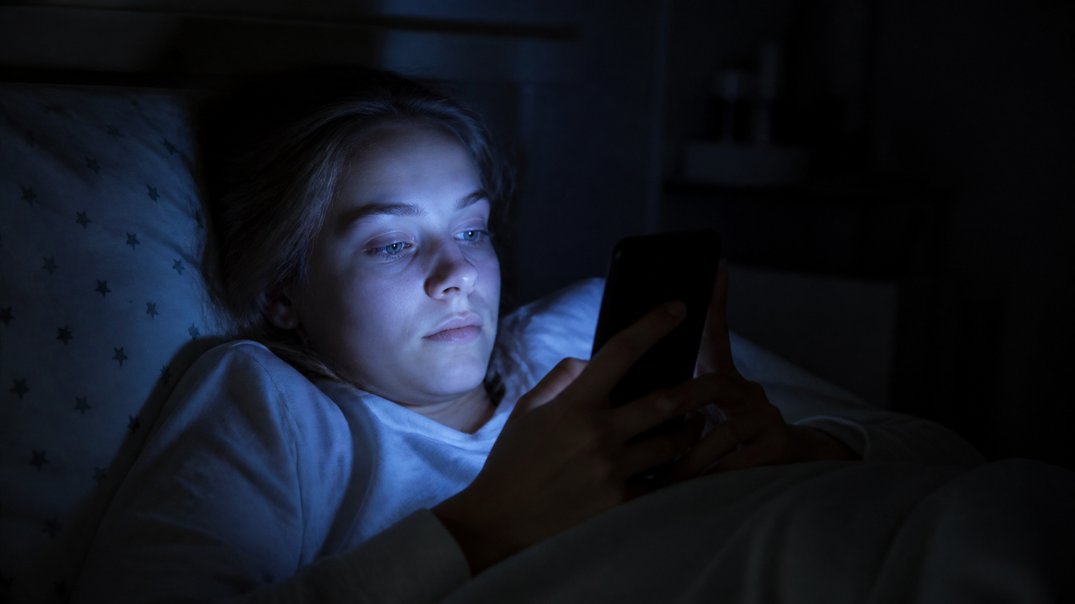
Blue light has become the default villain in almost every conversation about screens and sleep, blamed for everything from difficulty falling asleep to broader sleep quality problems and even long-term eye strain concerns. The concern has real biological grounding, but the popular narrative has run considerably ahead of what the actual research supports, and separating the genuine mechanism from the overstated claims matters for figuring out where your own energy is best spent rather than chasing every product marketed around this single concern.
This article looks at what blue light actually does to your circadian system, why it’s easy to conflate wavelength effects with other factors that matter just as much or more, what current research actually shows, and when blue light management genuinely helps versus when it’s a smaller piece of a bigger picture than marketing tends to suggest.
What Blue Light Actually Does Biologically
Specialized cells in the retina, distinct from the ones responsible for standard everyday vision, are particularly sensitive to blue wavelength light and play a direct role in signaling to your circadian clock. When these cells detect blue light, they send a signal that suppresses melatonin production and reinforces daytime alertness, which is exactly the mechanism that makes blue light useful for morning light exposure and potentially disruptive when it happens close to bedtime instead.
This mechanism is genuinely real and well established at the biological level. Blue light exposure in the evening measurably suppresses melatonin more than equivalent exposure to warmer, longer wavelength light. The question isn’t whether this mechanism exists at all, but how much it actually matters in the context of typical evening screen use compared to other factors happening at the exact same time.
Separating Wavelength From Brightness and Content
One of the most consistently overlooked details in blue light discussions is that overall brightness matters independently of wavelength, and often matters considerably more in practical terms. A dim screen emitting blue light suppresses melatonin considerably less than a bright screen, regardless of color temperature, meaning simply lowering screen brightness in the evening may address a meaningful portion of the concern without needing specialized blue light blocking tools at all.
Content and engagement level add another layer that’s easy to conflate with the wavelength issue specifically. A tense show, an engaging video game, or a stressful work email checked right before bed can activate dopamine and stress-response systems in ways that delay sleep onset regardless of the light’s specific wavelength involved. Someone who struggles to fall asleep after using their phone in bed may be experiencing a combination of light exposure, brightness, and mental stimulation all at once, making it difficult to isolate blue light specifically as the single responsible factor.
What the Research Actually Shows
Research specifically isolating blue light’s effect on sleep, separate from brightness and content, shows a real but often fairly modest effect for typical evening screen use at typical distances and durations. Some studies using blue light blocking glasses or filtered screens have found modest improvements in subjective sleep quality and melatonin timing, while others have found smaller or less consistent effects, particularly when brightness and viewing distance aren’t carefully controlled for as separate variables.
This pattern suggests that blue light is a genuine contributing factor, but likely a smaller piece of the overall puzzle than popular wellness content often implies. The dramatic framing of blue light as the primary cause of modern sleep problems oversimplifies a considerably more nuanced picture involving brightness, timing, content, and individual sensitivity all interacting together rather than one single wavelength issue explaining everything on its own.
When Blue Light Blocking Actually Helps
Blue light management tends to matter most for people already dealing with a sensitive or noticeably disrupted circadian rhythm, including people with a strongly evening-leaning chronotype trying to shift earlier or people working night shifts who need to actively protect their daytime sleep from bright light exposure. For these groups, blue light blocking glasses, dimmer displays, or night mode settings on devices can offer a genuinely useful additional tool alongside other circadian-supportive strategies.
For people without a particularly sensitive circadian rhythm, simply dimming screens, reducing stimulating content before bed, and maintaining consistent sleep timing may address most of the practical everyday concern without needing to invest heavily in blue light blocking products specifically. This doesn’t mean blue light blocking tools are entirely useless, but it does mean they’re one option among several rather than an essential, non-negotiable requirement for good sleep.

Putting This Knowledge to Work
Rather than treating blue light as the single most important factor in evening sleep hygiene, it makes considerably more sense to address the broader combination of brightness, content, and timing together. Reducing screen brightness, choosing calmer content in the hour before bed, and maintaining a consistent wind-down routine likely produces more meaningful results than focusing on blue light wavelength alone.
Supporting the underlying nervous system processes involved in winding down can help considerably regardless of how much blue light exposure factors into your own particular situation. A formula like Performance Lab Sleep, combining magnesium, L-Tryptophan, tart cherry, and lemon balm extract, supports the biological pathways involved in sleep onset directly, working as a complement to any light management strategies rather than depending on getting the blue light piece perfectly right.
Frequently Asked Questions
Are blue light blocking glasses worth buying if I use screens before bed regularly?
They can offer a modest benefit for some people, particularly those with a sensitive circadian rhythm, though dimming screen brightness and using built-in night mode settings may provide similar benefit at no additional cost, making expensive glasses a reasonable but not strictly necessary purchase for most people.
Does reading on an e-reader affect sleep the same way as a phone or tablet?
Many e-readers use different display technology with less blue light emission than phone or tablet screens, and reading content also tends to be less actively stimulating than social media or video content, meaning e-readers are often less disruptive to sleep than more brightly lit, more engaging devices.
Is blue light from overhead room lighting as significant a concern as blue light from screens?
Standard indoor lighting can contribute to melatonin suppression as well, particularly bright, cool-toned LED lighting, though screens are typically held closer to the eyes and used for longer, sustained periods, which tends to make screen-based blue light exposure more practically significant for most people.
Should I avoid all screens for a specific amount of time before bed?
There’s no single universally agreed-upon cutoff time, though reducing screen brightness and stimulating content in the thirty to sixty minutes before bed tends to be a reasonable, practical approach for most people.