
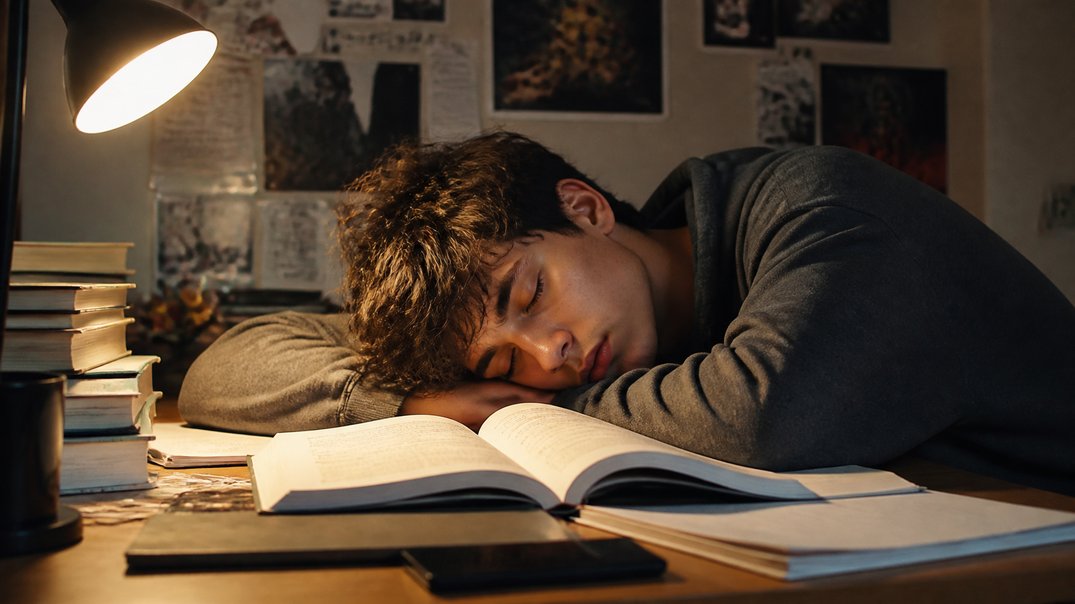
Ask most parents of teenagers whether their child can simply choose to go to bed earlier and get up easier, and you will likely hear a tired sigh in response. The struggle to get a teenager up for a 7 a.m. school start is rarely a matter of willpower or discipline. It reflects a genuine, well-documented biological shift in circadian timing that occurs during puberty, one that pushes a teenager’s natural sleep window later just as school schedules typically demand the earliest wake times of their entire academic career.
This article looks specifically at the biology behind that mismatch, going deeper than the brief mention of adolescent chronotype delay covered elsewhere on this site, and considers what the research says about the tension between teenage circadian biology and typical school scheduling.
The Circadian Delay of Puberty
Researchers have documented a measurable shift in circadian timing during adolescence, commonly referred to as a delay in dim light melatonin onset, the point in the evening when melatonin naturally begins to rise and signal that sleep is approaching. In many teenagers, this onset shifts later by an hour or more compared to preadolescence, meaning a teenager may not feel biologically ready for sleep until well past 11 p.m., even with reasonable evening habits in place. This shift is linked to hormonal changes during puberty interacting with the body’s circadian clock system, and it affects nearly all teenagers to some degree, though not equally.
Genetic Variation in How Strong the Delay Is
While the puberty-related circadian delay is close to universal, its magnitude varies from teenager to teenager, and genetic variants involved in circadian clock regulation appear to be part of why. Variants associated with a naturally later chronotype, the kind reflected in a Chronotype report, may compound the typical adolescent delay, producing an especially pronounced night-owl pattern in some teenagers compared to their peers. This helps explain why some teens adjust relatively smoothly to a slightly later bedtime while others seem to be fighting their own biology at every turn.
Why This Collides So Directly With School Schedules
The problem is not simply that teenagers stay up late, it is that the same biological shift also delays their natural wake time, and school schedules built around early first bells do not accommodate that delayed wake window. A teenager whose body is not ready for sleep until midnight and would naturally wake around 8 or 9 a.m. if left alone is instead often required to be alert and ready to learn by 7:30 a.m., creating a chronic sleep debt that accumulates across the school week rather than resolving itself.
This is fundamentally different from an adult choosing to stay up late for entertainment and then feeling tired the next day by choice. The adolescent circadian shift is not a preference, it is a documented physiological change that makes early rising genuinely harder for the developing teenage brain, regardless of how much a given teenager wants to cooperate with an early schedule.
The Research Behind School Start Time Discussions
This mismatch has fueled ongoing public discussion and research around later school start times for adolescents, an area some school districts have examined or piloted in recent years. Reasonable people, including researchers, parents, and school administrators, weigh this issue differently, since later start times raise legitimate logistical questions around transportation schedules, after-school activities, and childcare, even where the underlying sleep science supporting a later start is well established. This remains an active area of policy discussion, and this article does not take a position on any particular school system’s decision, but understanding the biology at least clarifies what is actually driving the conversation.
The Downstream Effects of Chronic Sleep Debt
The consequences of this mismatch extend beyond simple morning grogginess. Research has linked chronic sleep restriction in adolescents to reduced attention and memory consolidation, both of which matter directly for academic performance, as well as to increased risk of low mood and heightened emotional reactivity. Because these effects tend to build gradually across a school term rather than appearing all at once, they can be easy to miss or misattribute to unrelated causes, such as motivation or attitude, when the underlying driver is an accumulating sleep deficit rooted in the biological mismatch described above.
This is part of why understanding the circadian science matters beyond simple curiosity. A teenager who appears unmotivated or irritable during first period may in fact be experiencing the predictable downstream effects of a sleep debt that started with a biology poorly matched to an early wake time, rather than a character issue worth disciplining.

What Families Can Do Within the Constraints That Exist
Regardless of what a given school’s schedule looks like, there are still meaningful adjustments families can make around the edges of the biological reality. Morning light exposure as early as possible after waking can help nudge a delayed circadian rhythm slightly earlier over time, while minimizing bright light, particularly from screens, in the hour or two before a teenager’s natural bedtime can support the process rather than working against it. Consistency in sleep and wake timing across weekdays and weekends, though genuinely difficult for many teenagers to maintain, also helps limit how much the body’s clock drifts later on days without early obligations.
Understanding a teenager’s specific genetic tendencies, through a Chronotype report or related sleep genetics reports available through a platform like SelfDecode, can help parents and teenagers alike approach the situation with more empathy and less friction, replacing “you just need to go to bed earlier” with a more accurate understanding of what is biologically realistic to expect. Any consideration of supplements or sleep aids for a teenager, including something like Performance Lab Sleep, should only be introduced with guidance from a pediatrician or family healthcare provider, since appropriate use in adolescents differs from general adult guidance.
Frequently Asked Questions
Does the teenage circadian delay affect all adolescents equally?
No, while the general shift toward later sleep timing during puberty is widely documented, its severity varies from teenager to teenager, with genetic factors, along with individual differences in puberty timing, contributing to that variation.
At what age does the teenage circadian delay typically begin to reverse?
Research generally suggests that circadian timing begins shifting back toward an earlier pattern in the late teens and early twenties, though the exact timing varies by individual and continues to be studied.
Can weekend sleep-in patterns make the weekday mismatch worse?
Yes, significantly later sleep and wake times on weekends can push a teenager’s internal clock even later, making the adjustment back to early weekday wake times more difficult, a pattern sometimes referred to as social jet lag.
Is it worth getting a teenager’s chronotype tested if they are already struggling with school mornings?
It can provide useful context for understanding whether a teenager’s struggle reflects a particularly pronounced genetic tendency toward a later chronotype, which may help inform conversations with the school or a healthcare provider about accommodations or strategies.