
As genetic testing has become more accessible, a natural question follows: can a simple DNA test actually tell you whether you’re likely to develop insomnia? The honest answer involves some genuinely useful science alongside a fair amount of nuance that often gets lost in marketing materials. DNA testing can meaningfully estimate insomnia risk based on current research, but understanding exactly what that estimate does and doesn’t tell you matters just as much as the number itself, and arguably matters more, since a number without context is easy to misread in either direction.
This article walks through how genetic insomnia risk is actually calculated, why the framing of that risk matters enormously, and who tends to get the most practical value out of this kind of testing, closing out this look at genetic risk and sleep disorders with a grounded, honest take on what testing can realistically offer.
What a DNA Test for Insomnia Risk Actually Measures
Modern genetic risk assessments for conditions like insomnia typically rely on something called a polygenic risk score. Rather than looking at a single gene, this approach combines information from dozens or even hundreds of genetic variants, each contributing a small individual effect, into one overall score reflecting cumulative genetic risk. This approach reflects the underlying biology fairly accurately, since research has shown that insomnia risk comes from many genes working together rather than any single dominant variant.
A polygenic risk score essentially places you somewhere on a statistical distribution compared to a large reference population, indicating whether your combined genetic profile suggests higher or lower likelihood of developing insomnia relative to other people. This is a genuinely more sophisticated approach than looking at any one gene in isolation, but it still comes with real limitations worth understanding before treating the resulting number as some kind of definitive prediction.
Relative Risk vs. Absolute Risk: A Crucial Distinction
Why “2x the Risk” Sounds Scarier Than It Is
One of the most commonly misunderstood aspects of genetic risk reporting involves the difference between relative risk and absolute risk. If a report states that a particular genetic profile is associated with twice the risk of insomnia, that sounds alarming on its face. But the actual meaning depends entirely on the baseline risk being doubled. If the general population’s baseline lifetime risk of chronic insomnia is, say, 10 percent, a doubled relative risk means roughly 20 percent, a meaningful increase but still meaning the large majority of people with that genetic profile won’t develop chronic insomnia at all, a detail that easily gets lost in a headline number.
This distinction matters enormously for how people interpret and react to genetic risk information. A relative risk figure presented without its corresponding absolute risk can make a moderate increase in likelihood sound like a near-certainty, when the reality is usually far less dramatic. Responsible genetic reporting should present both figures together, and it’s worth seeking out that context whenever relative risk numbers are presented on their own.
What These Tests Can’t Tell You
Even a well-constructed polygenic risk score has real boundaries. It cannot account for environmental factors like stress levels, work schedule, sleep environment, or life circumstances, all of which play a substantial role in whether a genetic predisposition actually translates into lived insomnia symptoms. It also cannot predict timing, meaning a higher genetic risk score doesn’t indicate when in life insomnia might develop, if it develops at all. Additionally, current polygenic scores are built primarily from research conducted in specific populations, meaning their accuracy can vary depending on someone’s ancestry and how well-represented that ancestry was in the underlying research.
These limitations don’t make genetic risk information useless, but they do mean it should be treated as one input among several rather than a definitive verdict. A genetic risk score is best understood as describing a tendency within a population-level statistical framework, not a personal prophecy about your specific future, and it works best when paired with an honest look at your own environment, habits, and history rather than read in isolation.
Who Actually Benefits From Getting Tested
Genetic insomnia risk information tends to be most useful for people who want to take a more proactive approach to sleep health before problems become entrenched, particularly those with a family history of insomnia or related conditions. Knowing you carry elevated genetic risk can be a reasonable motivator to prioritize consistent sleep habits and stress management earlier, rather than waiting for a crisis to force the issue, especially for anyone who has watched a parent or sibling struggle with the same pattern for years.
It tends to be less useful, and potentially counterproductive, for people prone to health anxiety, since a moderately elevated risk score interpreted without proper context could create unnecessary worry about an outcome that may never actually occur. Approaching genetic risk information with a calm, practical mindset, focused on what you can actually influence, tends to produce the most benefit.
Putting This Knowledge to Work
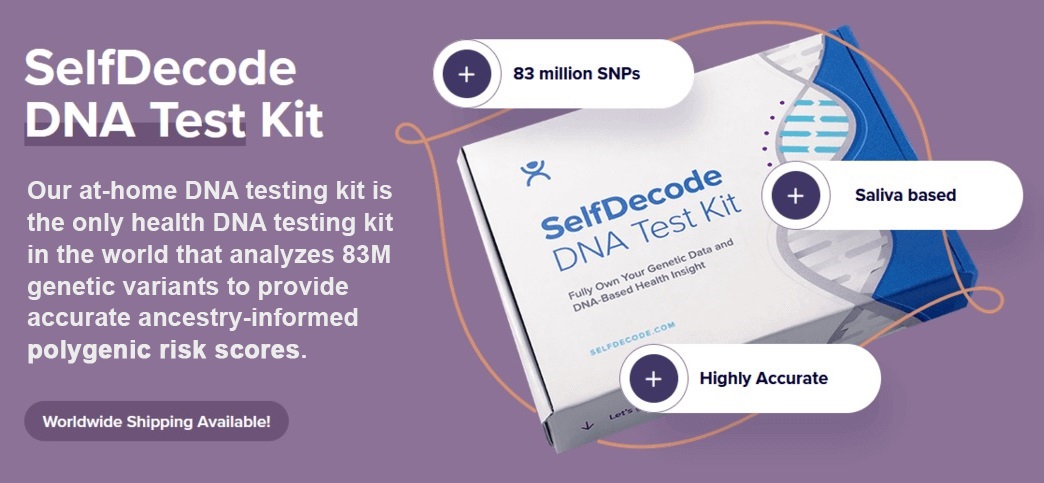
If you’re considering genetic testing to understand your own insomnia risk, a report like SelfDecode’s Sleep analysis presents this kind of information alongside related circadian and neurotransmitter genes discussed throughout this site, giving useful context rather than an isolated, hard-to-interpret number. Pairing that information with practical, everyday support makes the most sense given the limitations discussed above.
On the nutritional side, supporting the biological systems connected to insomnia risk through a formula like Performance Lab Sleep, which combines magnesium, L-Tryptophan, tart cherry, and lemon balm extract, is a reasonable proactive step regardless of your specific genetic risk score, since these ingredients support systems relevant to sleep quality for genetically predisposed and non-predisposed people alike.
Frequently Asked Questions
Is a polygenic risk score for insomnia the same as a medical diagnosis?
No. A polygenic risk score reflects statistical likelihood based on genetic variants, not a clinical diagnosis. Insomnia is diagnosed based on reported symptoms, sleep patterns, and clinical criteria, which a genetic risk score cannot substitute for.
How accurate are polygenic risk scores for sleep-related traits currently?
Accuracy varies by trait and continues to improve as underlying research grows, but polygenic scores for complex traits like insomnia currently explain a meaningful but still partial portion of overall risk, reflecting the reality that genetics is only one contributing factor among several.
Will my genetic insomnia risk score change over time as I get retested?
Your actual genetic variants don’t change, but the risk score itself can be recalculated and refined as researchers identify additional relevant variants and improve the statistical models used to generate these scores, meaning the same DNA data could yield a more precise estimate in the future.
Should I be worried if my genetic risk score for insomnia comes back elevated?
An elevated score reflects increased statistical likelihood, not an inevitable outcome. Many people with elevated genetic risk never develop significant insomnia, particularly when they maintain supportive sleep habits and manage stress effectively.